About the Conference
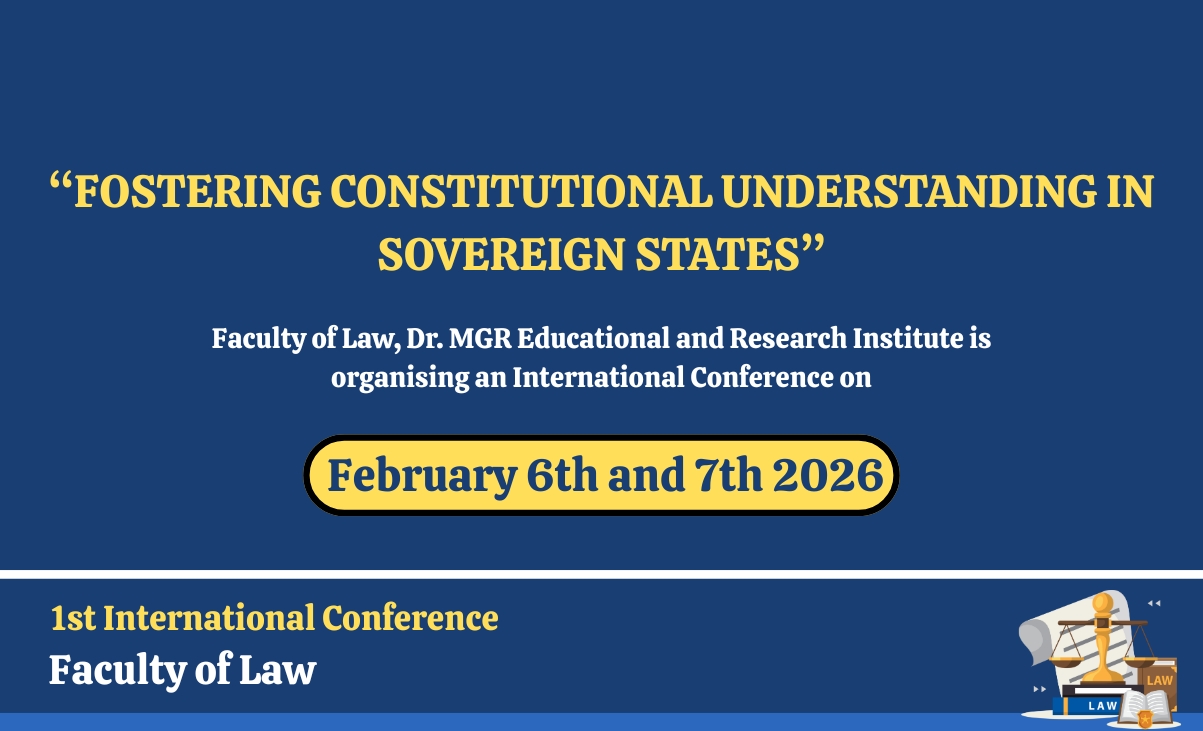
Amid rapid technological change, shifting global norms, and rising constitutional challenges, sovereign states face increasing pressure on their governance systems. The International Conference on Fostering Constitutional Understanding of Sovereign States provides a timely forum to examine how nations interpret and strengthen their constitutional frameworks. Focusing on legitimacy, crisis response, technological impacts, reform processes, and the balance between sovereignty and international obligations, it offers a clear comparative perspective on contemporary constitutionalism.
By convening scholars, judges, policymakers, and civil society, the conference aims to enhance constitutional literacy, encourage innovation, and build a global network committed to adaptive and justice-oriented constitutional systems in the twenty-first century.
Dates
February 6th and 7th, 2026
Mode
Offline – in-person
Themes
- Constitutional Resilience in Times of Crisis
Sub-themes:
- Emergency powers and constitutional safeguards
- State responses to pandemics, wars, and natural disasters
- Limits of executive authority during national emergencies
- Impact of international human rights instruments on domestic constitutional law
- Digital Constitutionalism and the Future of Rights
Sub-themes:
- Algorithmic governance and constitutional legitimacy
- Data privacy, surveillance, and constitutional protections
- Emerging rights: digital dignity, neurorights, online freedom of expression
- Legal frameworks for artificial intelligence and state accountability
- Judicial Power, Accountability, and Independence
Sub-themes:
- The evolving role of constitutional courts and tribunals
- Courts as defenders of rights of vulnerable groups and civil liberties
- Threats to judicial autonomy in populist and authoritarian regimes
- Judicial activism vs. minimalism in constitutional interpretation
- Judicial control of executive overreach
- Environmental Constitutionalism and Intergenerational Justice
Sub-themes:
- Constitutional recognition of environmental rights and duties
- Climate litigation and the role of constitutional courts
- Rights of nature, indigenous ecological knowledge, and sustainability
- Intergenerational equity in constitutional interpretation
- Equality and Constitutional Inclusion
Sub-themes:
- Constitutional accommodation of ethnic, linguistic, and religious diversity
- Gender-sensitive constitutional language and frameworks
- LGBTQ+ rights and constitutional protections
- Balancing national unity with cultural pluralism
- Sovereignty vs. Supranationalism: Navigating Global Legal Obligations
Sub-themes:
- Tensions between domestic constitutions and international treaties
- Role of international courts and tribunals
- Indigenous sovereignty and transnational rights
- Sovereignty in post-colonial and decolonisation contexts
- Constitutional Reform: Process, Politics, and Participation
Sub-themes:
- Inclusive constitution-making and amendment mechanisms
- Populism, referenda, and the weaponisation of constitutional change
- Public participation, education, and transparency in constitutional processes
- Best practices in constitutional drafting and reforms
- Constitutional Culture, Civic Education, and Public Participation
Sub-themes:
- Democratisation of constitutional knowledge
- Teaching constitutions in schools and universities
- Building public trust and awareness of constitutional principles
- Youth engagement in constitutional debates and reforms
- Role of media and civil society in shaping constitutional understanding
- Any other sub-theme relevant to the broader theme of this Conference. The listed sub-themes are only suggestive.
Distinguished Guests
International Speakers
- Valentina Volpe, Associate Professor, Université Catholique de Lille, France
- Stuart Marslen, International Lawyer & Visiting Professor (Law), University of Johannesburg, United Kingdom
- Sasilina Kamaruddin, Senior Lecturer, Sultan Idris Education University, Malaysia
- Dato’ Mary Lim Thiam Suan, Director, Asian International Arbitration Centre, Malaysia
- Marcos Augusto Maliska, Professor, UniBrasil – Centro Universitário, Brazil
National Speakers
- Justice T. N. Vallinayagam (Retd.), Chairman, NCSRC, New Delhi, Presiding Judge, Lok Adalat, High Court of Madras
- Ar. L. Sunderesan, Additional Solicitor General of India (High Court of Madras)
- Dr. S. Shanthakumar, Director, Gujarat National Law University (GNLU)
- Dr. O. V. Nandimath, Vice-Chancellor, West Bengal National University of Juridical Sciences (WBNUJS)
- P. S. Amalraj, Chairman, Bar Council of Tamil Nadu & Puducherry
- J. Vijayalakshmi, Director of Legal Studies, Government of Tamil Nadu
- G. Jaya Gowry, Principal, Dr. Ambedkar Government Law College, Pudupakkam
Fees
- Paper Presenters
- Academician / Industry experts – INR 2,000
- PhD scholars – INR 1,500
- Students – INR 1,000
- Participants
- Fees – INR 800
Paper Publication
All accepted papers will be published in the Conference Proceedings (with ISBN) and selected papers will be published in a Scopus Indexed journal.
Who can submit?
Individuals from any educational or professional background can participate in this conference. Age no bar.
How to submit?
Word & Structure Requirements
- Full paper: max 3000 words
- Abstract: max 350 words
- Harvard referencing style
- MS Word format
- Font: Times New Roman, 12 pt
- Line spacing: 1.5
- Paper size: A4
Originality & Ethics
- Paper must not be under review elsewhere.
- All submissions will be screened for plagiarism. Plagiarism must be within acceptable academic limits.
Review & Selection
- Every paper will undergo a review process
- Only selected papers will be considered for presentation/publication.
What you’ll get
- Rewards
- Best Paper
- Best Presenter
- Certificate of Participation/Presentation
- Access to All Plenary and Technical Sessions
- Opportunity for Publication
- Premium Conference Kit and Materials
Refreshments (Twice) and One Working Lunch
Contact
- focus@drmgrdu.ac.in
- 9884117641, 9566179985